
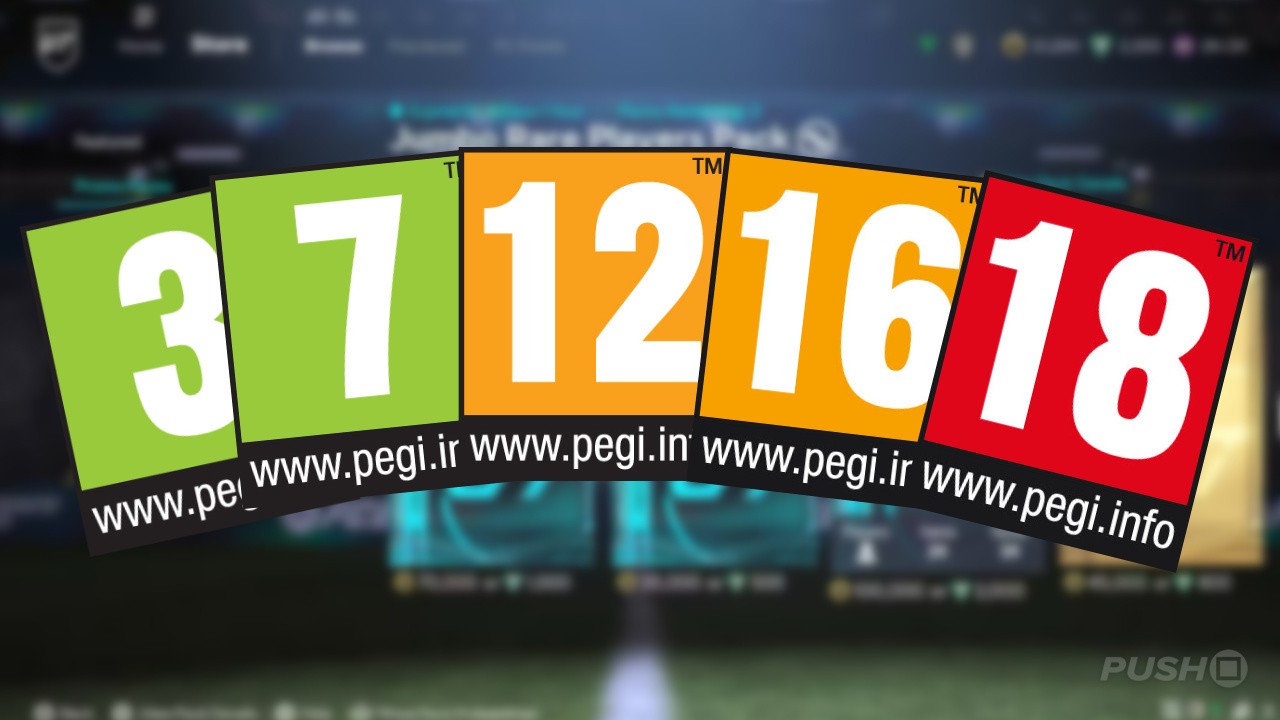
Pan-European Game Information, or PEGI as it's known, is the video game age classification organisation for most of the continent, and it's about to introduce some pretty major changes.
As reported by Eurogamer, PEGI has outlined a number of new rules and regulations that aim to protect players from some of modern gaming's potentially harmful systems, most notably loot boxes and microtransactions.
In short, it means that games such as EA Sports FC 26, which typically receive a PEGI 3 rating (with notifiers about its in-game purchases), may be attributed much higher age ratings under the new rules.
With regards to microtransactions, one new stipulation is that any game offering time- or quantity-limited purchases will receive a PEGI 12.
Director general of the company, Dirk Bosmans, says this could be lowered to a 7 if the game contains a way to turn off these purchases, acknowledging that this is a rarity. The hope is that it might encourage more publishers to include the option.
Paid random items, such as loot boxes, gacha systems, card packs, and so on, will automatically set your game to a PEGI 16. Returning to the FC 26 example, that game would jump from a 3 to a 16 essentially because of Ultimate Team.
This could in theory be reduced to a 12 if the aforementioned ability to toggle off purchases is implemented, but Bosmans says this "doesn't exist" at present.
Next is the idea of games "incentivising or pressurising" players to return to them, per the report. "When kids tell their parents: I have to play this today because I want to continue my streak, or there is a daily quest that I have to play," Bosmans explains.
This may grant a PEGI 7 rating, and it could be increased to a 12 if the game also punishes you in some way for not coming back within a certain time.
Finally, any game with "unrestricted" online communication — i.e. no moderation or reporting or other controls — will get an 18. Most games featuring voice chat among players do offer support/report systems, so this is unlikely to be enforced very often.
All of this stuff comes into effect starting in June 2026.
Bosmans describes these changes as "probably the most significant update we've had in our history".
PEGI is essentially following the lead of USK, the equivalent organisation for Germany, which already has similar conditions in place for these issues.
"I hope I've made it clear that we try to address concerns that we've had on our radar for a while, but where we noticed that our initial narrative of how these things can be approached clearly isn't enough any more so more needed to be done," Bosmans says.
Obviously the hope is that all this stuff will protect young players, better inform parents, and maybe affect change in how stuff like microtransactions etc. are implemented.
What do you think? Tell us in the comments section below.
[source eurogamer.net]


Comments 52
About f****** time if you asked me, so the next question is when will Roblox close down?
Age ratings don't really do anything, parents will still buy their kids these games. GTA has an age rating of 18 and that hasn't stopped kids from playing.
Just aswell I'm not a child or under 18 anymore so it won't effect me at all.
Storm ina teacup.
Just add age verification to gambling and predatory games and be done with it!
Pegi 18 never stopped us from playing violent video games when we were wee kids, did it?
@Oram77 I hate that f*ckin game , its banned in my house , seedy cesspool of a game
It’s a good idea. If a game allows a child to spend additional money with minimal safeguards then it really isn’t suitable for 3 year olds. At that point you might as well just let your kid loose on eBay.
I guess sonic games age rating will start to match its actual audience.
I don’t see parents refusing to buy fifa due to a 16 age rating, but it’s a step in the right direction.
Phew..Good olde UK's first Brexit benefit...well it better be, hey Nigel..Nigel. Come on who was doubting a Thomas, the grass is greener, there be bluebells over.....
This isn't going to make a blind bit of difference. Not enough parents are gaming literate. How many parents simply allow their kids to play GTA V?
@ShadowRJ how old do you think parents are these days? Parents in their 30s and 40s grew up gaming in the 90s and early 2000s - they definitely know all about video games.
It might be a small number but my friends have kids ranging from 4-18 and none of them let their kids play GTA
Duolingo gonna be an 18 at this rate with all the threats it gives for not coming back every day. 😆
@Boomers-r-us We still use PEGI in the UK so these rules will apply here. Personally, I’ve always thought moving away from the stronger and more widely recognised BBFC ratings to PEGI was a mistake but here we are. At least PEGI are moving in the right direction.
Good changes overall.
@UltimateOtaku91 not yet. Once they will start enforcing accounts for age verification with either linking cards or id check, unverified accounts won't be able to buy the games of specific PEGI rating.
@Clytorial_Impact sure, there are plenty of parents who used to be gamers, but most people, even the ones who used to play candy crush on their phone know little to nothing about video games. My ex used to play Mortal Kombat on Sega Saturn, yet couldn't care less about video games and still thinks you can pause any game.
Very good update to the system. Addictive systems have negative impacts on younger people and should not be accessible to them. Also happy to see there's no censorship initiatives, which should be combated against. Could not imagine living in Japan and gaming there with all the censorship Cero forces.
Good. This is good.
I heard rumors about this through someone in BBFC, PEGI in many regions isn't mandatory it's only suggested and then it's up to that country itself to issue the specific rating. The problem is that the sheer volume of media means some ratings get rushed and that happens because they do trust that PEGI suggestion. If PEGI are pushing their restrictions higher then like I said about Germany yesterday, it's not a good sign.
It does protect children (in theory) but when the rating is higher in a place like Germany that product can't be advertised on a shop floor and copies tend to get pushed straight to online retailers. It affects visibility of the product which can affect sales. Most folks will only see this as how it affects the UK market, it could be worse for other parts of Europe. I had nothing good to say about the USK yesterday, they are almost militant in their approach to restrictions and ratings.
Good to see. But the problem with this it's kind of a blame the victim change. It's like raising the age of wearing a bikini at the pool from 12 to 18 b/c of all the sexual harassment from the boys. The article even says several times: we hope this forces the industry to change. If they want the industry to change force them to change. As most people commented the PEGI age eating ain't doing all that much.
Though I'd argue making a game 18 might get a parents attention but going from 3 to 12? Nothing wrong with a game for 12 year Olds. Or even 16 probably. I'd argue they might be better off getting rid of all the age ratings except for 18. If it has gambling it's 18. Parents might notice then.
Of course probably like 99% of gaming these days is on mobile or digital on console, so is anybody even aware of the PEGI at all? It's not like 2 or 3 decades ago where we're buying boxes off a shelf with a big code on the front. Do a survey of all parents who's kids play Roblox and ask them the PEGI. They may guess it correctly, but nobody knows.
I'd love to see this implemented at the ESRB.
Personally I would set most of these practices as 18+ , and particularly as we know younger teenagers tend to be allowed to have games of a higher age rating than they should.
The HoYo-verse found panicking in a darkened corner somewhere
@VeldinX i know, sorry it was a poor attempt sarcastic humour
Was about time.
Not high enough I say. They'll hurt these companies more if they make it pegi 18. Especially with all the influencers out there contantly supporting that crap.
About darn time! Although I know kids will still get these games if they really want to
Removed - unconstructive
@Netret0120 Yeah, but it'll at least hold parents more accountable. Cause I know at least in the US... Game stores couldn't just sell any game even if the parent is present, it still require ID check if M rated, and the parent has to give consent which also usually involves the parent being given information on why it rated that way.
Too many parents go shoulder shrug "We didn't know" after their kids spend ungodly amount of time and money in a game.
@rjejr I was gonna say, I couldn't even tell you where it says the PEGI rating when buying a digital game
@Clytorial_Impact Oh, I'm aware that gaming literacy is improving (if ever so slightly) but it isn't just an age thing. A lot of parents simply don't know what the game was about. I was having dinner with family, and one of the little kids spouted something about GTA which made his mother shocked, because she didn't know what was in GTA.
@Globo I've heard the uh, pan-European videogame market is a bit bigger than just yourself.
This'll only stop the children themselves being able to buy the games. It's a positive change, but as others have pointed out, it won't stop parents letting their kids play games they shouldn't. I know for a fact that a number of parents at my kids' primary school let theirs play GTAV, and they couldn't (or shouldn't) have been able to buy it for themselves.
Also just the ability to turn off the microtransactions/loot boxes isn't enough info, how easy is it to do so? Can it be undone just as easy? Can the kid just turn it on and off as they like?
I feel like doing a victory lap! It's like the grown-ups finally woke up🎉
@Oram77
Yeah, f*** Roblox and their low-effort brainrot.
Make all games with gambling mechanics 18+
@UltimateOtaku91 if you don’t think age verification to play games isn’t coming you haven’t been paying attention.
Its mostly live service slop that do it ea and 2k are scummy companies that need investigating also im calling 2k out at the minute with there battle pass in a wrestling game so you can pay to unlock whats already bought dlc disgusting move from a disgusting company never-ending putting an age restriction on these things they should be banned
@MrPeanutbutterz I didn't know I was spokesperson for pan European gaming I was unaware I was speaking for anyone but myself sorry if I came across that way to you my man.
@Boxmonkey That's not going to stop kids from playing these types of games, they will just get their parents to verify for them or find another work around like using a passport image etc. I know age verification is inevitable but it's not going to change much in the grand scheme of things.
@rjejr trick question; roblox hasn't had a pegi age label for a while; as they consider it more of a platform than a product, it gets the same "parental advisory" sticker as Facebook and YouTube.
@Oram77 never it makes too much of money only way it get shutdown if somehow behind some children trafficking
@UltimateOtaku91
I disagree, the previous generation, those with teenagers and kids in their early 20s have no doubt have had unlimited acess to the internet, gaming etc.
when i look around in my circles, and also read about it in the news, us with small children right now, have a completely different point of view in regerds to age restrictions, SoMe etc.
and i really think that's a global phenomenon, look at australia who already have an age restriction for SoMe, and in many european countries the talk is the same.
I don’t understand why people are celebrating this as I highly doubt this will change anything. When I was growing up a lot of people in my school were playing GTA when they were knee high. In my experience (and of course I can only speak from my own) parents just don’t care about these things and I very much doubt anything’s changed since then, especially with how much more freedom children have gotten over the years. But hey, I could be wrong.
Sounds reasonable! Who knows, maybe it will apply a bit of pressure on publishers to reign in some of these more predatory practices.
@rjejr I agree but got thinking. Even tv shows/movies, or odd games you see the presentation differences, dialogue, etc. Then again how big do they make the ratings? How to inform people what they mean, how much to make a person care or understand the systems, let alone the others making clear what suggestions or extent of presentation they visually or dialogue or whatever context they state/review by.
I think the dailies and loot boxes extent is odd for them to change to the ages they are, I think dailies and more not just punishment should be higher, as it sounds odd for how low it is, that can still be addictive of dailies reward or not.
Most are on mobile but rating suggestions/regulating (whatever extent) all Roblox games or all flash games (if talking a 2000s equivalent) or any user generated content by creators isn't viable and they don't get passed over at all. They present it as an overall platform/game.
Any NSFW games could be on there not just the other things users do. Or are they blocked on mobile? But not PC
Even other apps have to account for that and what they tone down or cut, like Anime List apps do for any H-anime listings.
Individuals games on the surface level yes, but Roblox and platform stuff not so much unless they go out of their way to as user generated games/content varies.
They aren't rehulating all skins, all minigames, all mods for platform type experiences.
No Minecraft mods on Java or Bedrock are regulated.
Surveys would help and a mix of different levels of gamers or non gamers in each background.
I mean the ESRB for the US you had the Phillips CDI gambling game but anything later varies due to how tweaks to the formula that it being themed or straight up or not.
I always liked Australia's (the stance on it sure varies like any rating system but the placement of them, the colours like PEGI but way they put the descriptors (even if not the best worded as many on boxes get crammed in) and digital it varies there due to the small space at the top of the PS store, or the rating above the wishlist heart on Switch or wherever on Xbox I forget, what the case on Google Play/iOS stores, Steam it's too bad with it on the side panel..
While PEGI/others always had them on the back of physical cases and I assume present them with descriptors via words or symbols on the store fronts?
I have no idea how they present different descriptors images of PEGI on eshops, they just put the 7, 12 ,18, etc. or the colour instead, they don't label descriptors I think? I have no clue.
What person goes to the website to read more? Do ESRB/PEGI expect people to?
Part 2:
Then again even Australias I go to the website and it can be just as confusing no just because of platforms it's on but just other details, sometimes it makes it clear of the details and the per rating strength of the themes, skin shots, violence, sometimes not.
ESRB Has it's description for sure, PEGI I have no idea. CERO either.
While I don't follow the PEGI rating even I found it odd with some swearing or some dialogue or some skin shots varying even in the Aussie rating system.
Does something need to be particular level of fan service not just skin shots.
Even having references/skin for PG always seemed weird to me. Not all that are 15 is the case but due to a lack of 12 and it slotting into PG I was like what.
Gambling though I mean. Whatever extent of the chances, saying the chances, and other things. What packs, what other angles, and it not being in a casino just a menu without such theming or cards (in the typical sense then sports player or other ones, I mean it's no sports player cards in a chips bag equivalent XD).
Whatever extent PEGI has over time with the few to now strengthening it or attempting to.
TV shows you get bikinis, low cut tops (that or pajamas in certain designs but it's up to the individual what they think or see versus others regulating stances) or particular dialogue and I"m like what how does this count. How much is it presented to one person over another.
Any rating system put that with teen ratings I always found weird. Depends on the concepts/dialogue versus visuals but even still. It varies per tv show or movie and how they present it which it always is with these rating systems but even still, who is approving it versus who isn't and puts it tougher then others.
When it comes to violence sure, blood, swearing, creepy/otherwise presentation, etc.
But gambling/skin shots you never know how particular they are with what ways they clarify the presentation.
Violence thinking it over again, but is it corpses, is it blood or the 'sweat' or is it what damage physically (digitally of course) or visually, what colour, etc.
It's almost like it's similar to reviewers, the individual approving it then the company approving it with other checks before sent out for approval. But who knows. I assume they do one of the two.
PEGI I can kind of see it a bit but for the gambling side or dailies I do think it's weird.
But of course things very per suggestion/iteration of the systems.
@roe
What region and what console? If I know what region I can find out on the website for the console maker and have a look.
I assume on the PS5 console (guessing based on what i remember store page layouts are like) it may display near features either below the wish list and purchase button with the description on the left what genres the game in the middle, and what other details like legal info on the right.
That or near the purchase/wishlist buttons, but I think the description/genres makes sense for the rating to be regardless of region.
For me it's at the top of the PS4 PS store (descriptors underneath, not any icons/symbols/logo ones like PEGI does on the box but no idea on the eshops), Switch it's above the wishlist (seems to differ for US as their design is completely different to mine), Xbox below the game art and purchase buttons
The PS store website (not console as I don't have one to check) has them on the right next to the price and features on the left/middle at least for the UK/GB store I checked and has the 'violence' and other descriptor icons next to the PEGI rating.
https://store.playstation.com/en-gb/product/EP9000-PPSA01470_00-MARVELSSPIDERMAN England/GB
https://store.playstation.com/en-au/product/EP9000-PPSA01468_00-MARVELSSPIDERMAN Australia
https://store.playstation.com/en-us/product/UP9000-PPSA03016_00-MARVELSPIDERMAN2
Ratings for all three on the right, all Spiderman
Console wise will differ from the website ones.
https://www.nintendo.com/en-gb/Games/Nintendo-Switch-download-software/Super-Mario-Galaxy-2915395.html#gameDetails UK Mario Galaxy details page, checked the Germany page seems the same but the US/Australian pages differ
Metroid Prime 4, it's in the left side, US page: https://www.nintendo.com/us/store/products/metroid-prime-4-beyond-nintendo-switch-2-edition-switch-2/
https://ec.nintendo.com/AU/en/titles/70010000034440 Australia it's in the table at the bottom below the description, with all the size, genre and other details, I actually prefer it, it's easier to read and it compliments the console eshop layout
Xbox I think is similar on all but I'm not sure.
Of course console ones are the same just translations, but the websites are different per some regions.
Mobile I assume near the reviews I forget.
@ShadowRJ agreed informing people about things when they choose not to pay attention, let alone them informing what the age rating is, what the colour means, what descriptors mean, instead of just buying it or just looking at it.
Age is one thing, being informed, understanding what they mean, what details sets people off.
How is it people go age and wisdom when it's the information they have or the experiences they have or the information they seek (reading about it, talking about it, whatever they do to cross reference which they likely don't), they aren't just 100 years old and go oh you have such wisdom 100 year old person and they go nope when you'd expect them to be wise after 100 years. But normal people don't think, sigh.
People that get it and people that don't get it, a kid having a game or media that has whatever content and not playing it in front of others (let alone audio blasting either) or and wording around it, when they didn't even do that says a lot really they didn't even care what they were saying.
I mean the kid saying all those things and not knowing 'hey this content and what you can do in it' says a lot really that they didn't even go hmm should I say this out loud or say around what was being playing in the gaming session to keep things safe sounding and keep the game, avoid a digital refund, them seeing how the refunding policies are, or just selling the disk, etc. Or closing the app if mobile and deleting it but well they are tied to accounts anyway unless they format the phone.
So the kid not even thinking about it and just saying anything, versus the parent, it kind of goes both ways there.
@UltimateOtaku91 Bad parents will be around.
@BrokenByTheScream That is why you have kids with no restraints because parents don't want to parent.
Video games,alcohol,x-rated vhs (before the BBFC ratings,)cigarettes and of course pornography..everything was easily accessible when we were kids and still is to the youth of today. Age ratings only serve to make people feel safe in the knowledge their kids shouldn't be able to view this material. These ratings are really redundant to be honest.
Sounds like some good changes to me.
Show Comments
Leave A Comment
Hold on there, you need to login to post a comment...